AI & Technology
Tavus Griffin: The AI Model That Makes Face-to-Face Conversations Feel Human
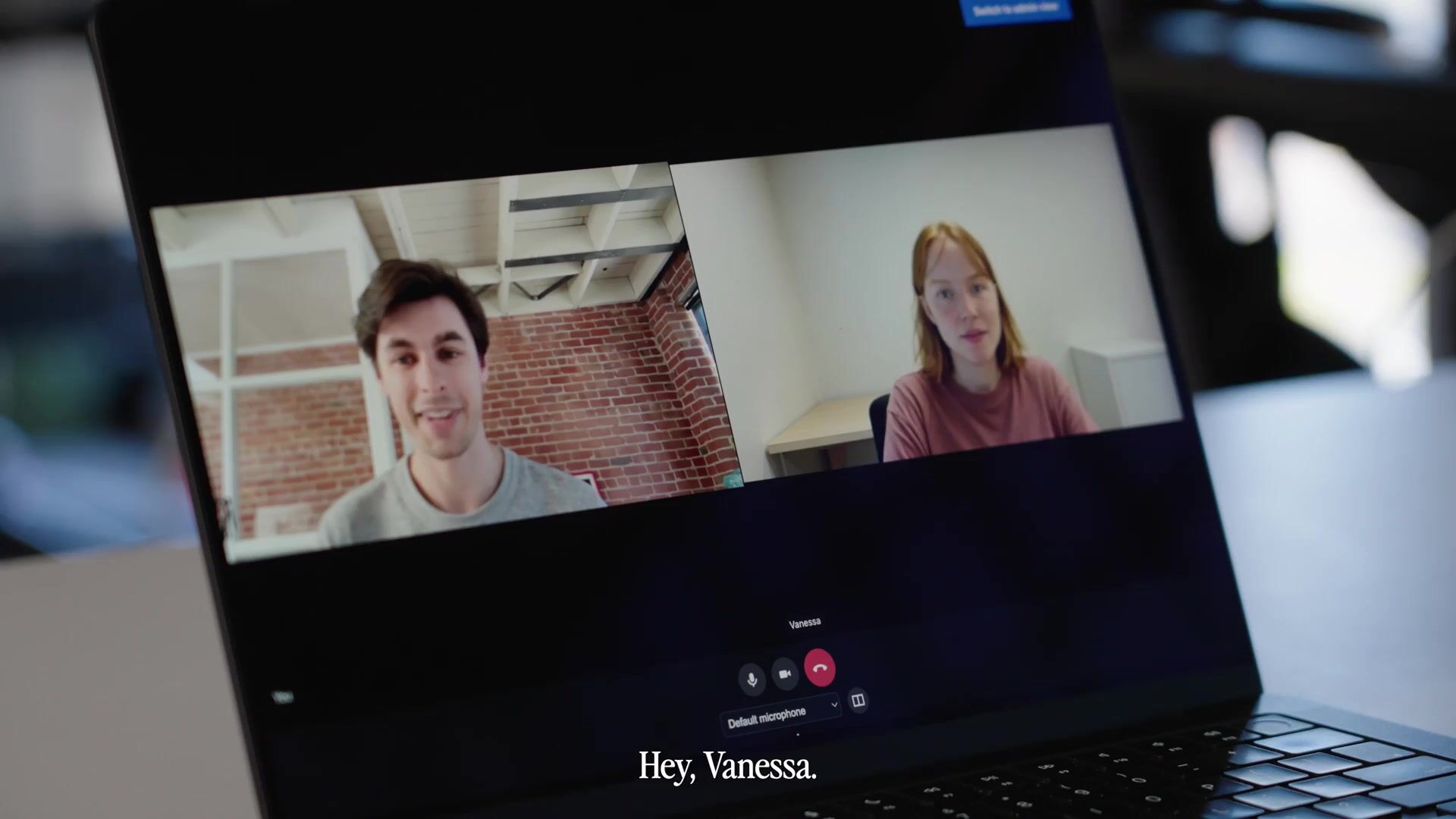
Overview: Face-to-Face Conversations That Feel Human
Artificial intelligence is moving beyond text and voice. The next major step is making AI interact with people more naturally — by understanding not only what we say, but also how we say it.
Tavus is working on exactly this idea with Griffin, its first Human Interaction Model (HIM) designed for real-time, face-to-face conversations.
According to Tavus, Griffin can interpret speech, facial expressions, gestures, tone, pauses, and conversational timing to create a more natural interaction between humans and AI.
What Is Tavus Griffin?
Griffin is a real-time AI model developed by Tavus for face-to-face human-AI interaction.
Traditional AI systems generally focus on text or voice. Griffin is designed to combine audio and video interaction, allowing the AI to respond to a person while also considering visual and conversational cues.
In simple terms:
Core Vision: Griffin is designed to make talking to an AI feel more like talking to another person.
Tavus calls Griffin a Human Interaction Model because its focus isn't only on generating answers. It is designed around the complete interaction between two participants.
When Was Griffin Released?
Tavus announced Griffin in October 2026.
The company introduced Griffin-Lite as a limited research preview while it continues developing the technology and working on safety and identity-disclosure considerations.
This means Griffin isn't currently a normal consumer chatbot that everyone can freely access.
How Does Griffin Work? Real-Time Multimodal Interaction
Griffin is designed around real-time multimodal interaction.
A simplified version of the process looks like this:
How Griffin Interprets and Responds
The model processes conversational and visual data continuously across four core stages:
1. Griffin listens to you: The system processes your voice and what you're saying during the conversation, considering words, tone, pauses, speaking speed, and interruptions. This allows the interaction to be more conversational than a simple question-and-answer system.
2. Griffin observes visual information: Because Griffin is designed for face-to-face interaction, video is an important part of the system. It can take into account facial expressions, gestures, body movements, and timing of reactions.
3. Griffin understands conversational timing: One of the biggest differences is when the AI responds. Imagine you pause mid-sentence (“I was actually thinking about—”). A human might chime in (“Yeah?”), and you continue (“—learning FastAPI.”). Griffin is built for this continuous conversational rhythm.
4. Griffin generates a video response: Instead of simply returning text, Griffin generates an audiovisual response with speech, facial reactions, gestures, and nuanced timing.
- Speech & Acoustic Processing: Analyzing pitch, cadence, pauses, and natural speech interruptions in real time.
- Visual Signal Recognition: Tracking micro-expressions, head tilts, nods, and non-verbal reactions.
- Conversational Rhythm & Timing: Detecting natural turn-taking pauses versus hesitation or mid-thought breaks.
- Dynamic Audiovisual Synthesis: Generating photorealistic lip-sync, gestures, and expressive video feedback.
What Does Full-Duplex Mean?
A key technical concept behind Griffin is full-duplex communication.
In a traditional AI voice interaction, the process often looks like:
With a full-duplex system, both sides can interact more continuously and organically:
You: “I wanted to ask you—”
AI: “Sure.”
You: “Wait, let me explain.”
AI: “Go ahead.”
This type of interaction is closer to a real human conversation because the AI doesn't have to treat every exchange as a completely separate turn.
Griffin's 48% Human-Likeness Result
One of the most talked-about claims surrounding Griffin is Tavus's reported human-interaction test.
According to Tavus, 26 out of 54 participants (about 48%) believed they were talking to a real person during the company's one-minute interaction test.
Context on the 48% Figure:
This is an interesting result, but it is important to understand the context. The study was conducted by Tavus itself and involved a relatively small number of participants. Therefore, the 48% figure should be viewed as a company-reported result, not as definitive proof that AI has generally become indistinguishable from humans.
Griffin and the Video Turing Test
The traditional Turing Test asks whether a machine can interact with a person well enough that the person cannot reliably determine whether they are communicating with a machine.
Griffin takes this idea into video conversations:
Human → Text → AI
Human → Live Video Conversation → AI
The goal is to make AI interaction feel natural enough that people focus on the conversation rather than the technology behind it.
How Can Griffin Be Used? Real-World Applications
The technology could have applications across several major domains:
- AI Tutors: Imagine an AI English teacher that conducts a live spoken conversation with you. Instead of answering multiple-choice questions, you simply talk to it (“Let's practice English for five minutes”) and it responds dynamically.
- Interview Practice: An AI interviewer can ask questions, listen attentively to answers, pose contextual follow-up queries, and simulate a realistic live technical or behavioral interview.
- Customer Support: Instead of opening a chat window, customers can talk directly face-to-face with a video AI representative (“Hi, I need help with my order”) through responsive voice and video.
- AI Sales Assistants: Businesses can deploy interactive, photorealistic AI representatives to showcase products, address objections, and guide customers through complex services.
- Training and Education: Interactive AI agents can power workplace simulations and role-playing exercises, such as practicing conflict resolution with difficult scenarios before client meetings.
How Can You Use Griffin?
Currently, Griffin isn't simply available as a normal public chatbot.
Tavus introduced Griffin-Lite as a limited research preview, meaning access is restricted while the technology continues to be developed and evaluated for safety and identity disclosure.
Users interested in exploring the technology can learn more through Tavus's official Griffin page at tavus.io/griffin.
Broader access is expected to depend on further development, feedback from research partners, and safety considerations.
Why Is Griffin Important? The Evolutionary Shift
The most interesting part of Griffin isn't simply that an AI avatar can talk. AI avatars already existed before Griffin.
The bigger development is the attempt to make AI understand human interaction itself.
The evolution looks like this:
This fundamentally transforms how people interact with artificial intelligence in the future.
Final Thoughts: Moving Beyond Simple Chat Interfaces
Tavus Griffin represents an interesting shift in conversational AI.
Instead of asking:
“Can AI answer my question?”
the industry is increasingly asking:
“Can AI interact with me naturally?”
Griffin is Tavus's attempt to answer that question through real-time video and audio interaction.
The technology is still developing, and claims about human-like interaction should be evaluated carefully. However, the direction is clear: AI is moving from simple chat interfaces toward more natural, real-time interaction.
If this technology continues to improve, future AI assistants may not feel like websites or chatbots at all. They may feel more like people you can sit down and talk to.
The Next Frontier in AI
From “Static prompt-and-response textboxes”
To “Real-time face-to-face conversations with genuine conversational timing.”