AI & Technology
Subvocal AI Glasses: The Future of Silent Communication Is Here
Overview: The Dawn of Silent Speech Interaction
Imagine interacting with ChatGPT, writing emails, or giving instructions to an AI coding assistant without speaking a single word. No keyboard, no microphone, and no audible voice. You simply move your lips as if you were speaking, and your thoughts are converted into text.
This is the idea behind Subvocal, an emerging AI wearable technology that aims to change how humans communicate with computers.
Subvocal has introduced smart glasses that use radar-based sensing technology to detect subtle facial movements and translate silently mouthed words into text. The technology has attracted significant attention online, with its demonstration reportedly receiving more than 11 million views.
But how does this technology actually work, and what makes it different from traditional voice assistants? Let's explore.
What Is Subvocal AI?
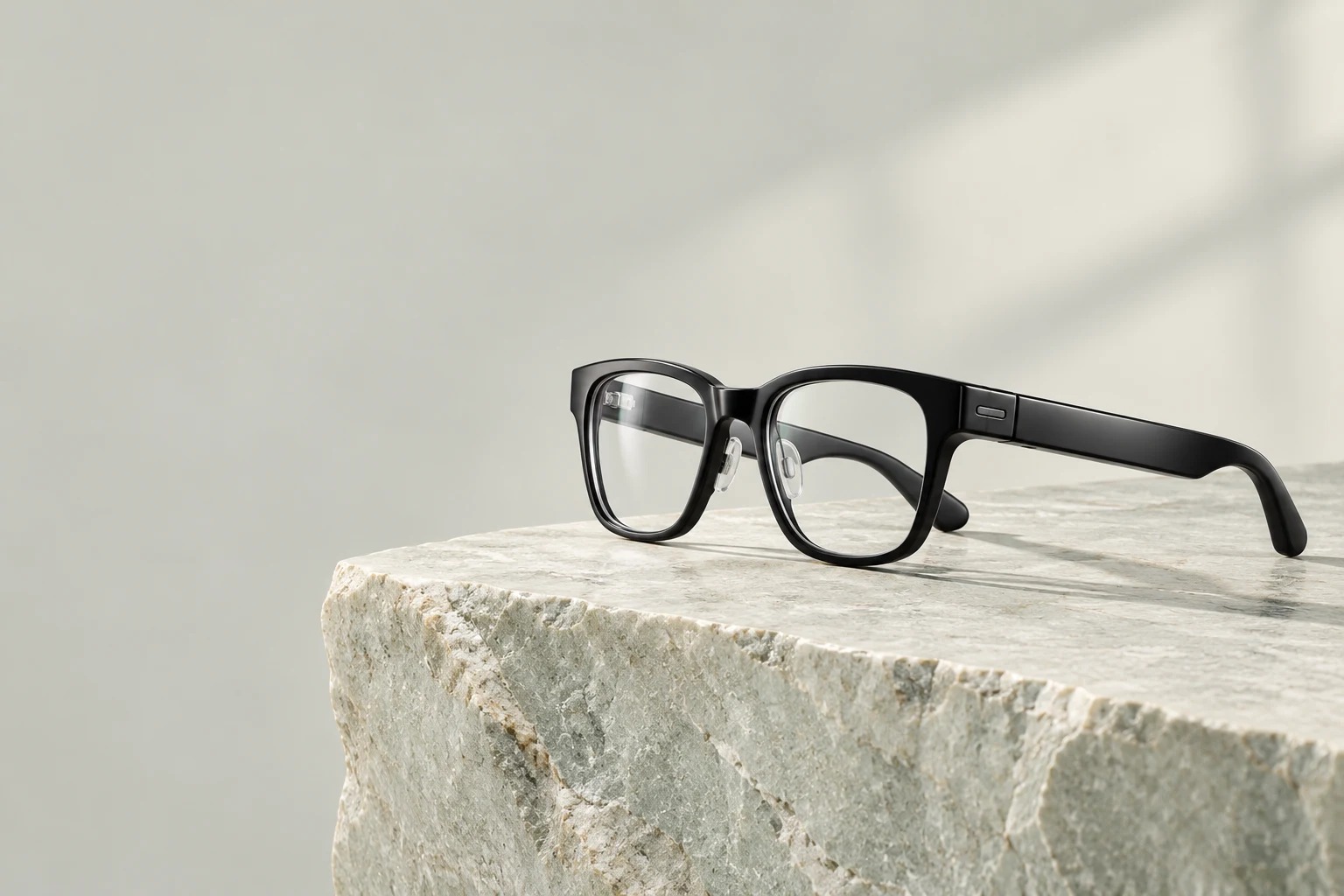
Subvocal is a wearable technology project designed to enable silent communication through smart glasses.
Unlike traditional smart glasses that rely on microphones or cameras, Subvocal uses radio-frequency (RF) radar signals to detect tiny movements associated with speech.
When someone silently mouths a sentence, their facial muscles and speech-related structures produce subtle movements. Subvocal's glasses capture these movements and use AI to interpret them, converting the intended words into digital text.
For example, imagine silently mouthing:
“Hey ChatGPT, explain how Python decorators work.”
The glasses detect the associated movements, process the signals, and convert the input into text that can be sent to an AI assistant. The primary goal is to make digital communication possible without speaking aloud.
- Silent Wearable Input: Converts unvoiced speech and lip movements into digital text in real time.
- Non-Contact RF Radar: Uses low-power radio-frequency waves rather than audio microphones or visual cameras.
- Natural Articulation: Detects tongue, lip, and facial muscle micro-movements without requiring exaggerated gestures.
- AI-Assisted Workflow: Directs silent instructions to AI coding agents, chatbots, messaging platforms, and email clients.
When Was Subvocal Introduced and Funded?
Subvocal gained public attention in late October 2026 following demonstrations of its silent speech technology.
The project reportedly originated from experiments at Stanford's TreeHacks hackathon in March 2026.
The company was founded by Aarush Yadav and Arnav Kumar, who explored how radar sensing and AI could work together to create a new communication interface.
In October 2026, the company publicly showcased its technology and announced $1.3 million in funding backed by Y Combinator and Afore Capital.
The company has also indicated plans for initial product shipments in Q1 2027.
Note: The technology has been demonstrated through prototypes, and commercial availability and performance may differ from initial demonstrations.
- March 2026: Initial concept and experimental prototypes developed at Stanford's TreeHacks hackathon.
- October 2026: Public debut, viral demonstrations reaching over 11 million views, and announcement of $1.3M pre-seed funding round.
- Q1 2027: Target shipping window for early reservation batches and developer hardware.
How Does Subvocal Work?
The most interesting aspect of Subvocal is its use of radio-frequency sensing instead of traditional audio recording. The system combines radar technology, signal processing, and foundation AI models to interpret silent speech through a five-stage pipeline:
- 1. Radar-Based Sensing: The glasses emit low-power radio-frequency signals towards the wearer's face, passing safely through the skin without physical contact.
- 2. Detecting Facial Muscle Movements: When silently mouthing words, the jaw, lips, tongue, and soft palate create subtle phase shifts and perturbations in the reflected radar signals.
- 3. Signal Processing: Hardware filters parse the reflected waves to isolate speech kinematics from background ambient noise, head movements, or eye blinks.
- 4. AI-Powered Speech Recognition: An AI model analyzes the processed signals and maps phonetic articulatory gestures into corresponding linguistic words and tokens.
- 5. Converting Speech Into Text: Decoded words are instantaneously streamed as digital text to connected AI assistants, coding tools, terminal agents, and messaging apps.
What Makes Subvocal Different From Traditional Lip Reading?
Traditional lip-reading systems generally rely on visible camera sensors to observe lip movements. Subvocal takes an entirely different radar-based approach, overcoming optical and environmental limitations:
| Traditional Lip Reading | Subvocal Technology |
|---|---|
| Uses optical camera images | Uses non-contact RF radar sensing |
| Observes visible surface lip movements only | Detects subtle deep internal movements (tongue, jaw, soft palate) |
| Requires visual line-of-sight and camera lens | Does not require any cameras (privacy-preserving) |
| Struggles with visually identical words (homophenes) | Distinguishes sounds using tongue positioning & phase telemetry |
| Depends heavily on ambient lighting and camera angle | Operates consistently in pitch darkness or direct bright sunlight |
Key Features and Capabilities of Subvocal
Subvocal introduces several breakthrough capabilities for AI-powered communication:
- 1. Silent AI Interaction: Formulate questions and prompt AI assistants like ChatGPT, Claude, or Perplexity without uttering a single audible word.
- 2. AI-Assisted Coding: Developers can issue instructions to coding assistants like Cursor or Claude Code without breaking focus or disrupting an open workspace.
- 3. Writing Messages and Emails: Draft complex messages, compose emails, and chat on Slack or WhatsApp silently while commuting or in quiet environments.
- 4. Silent Communication Between Users: Two or more individuals wearing compatible glasses can conduct text-based conversations without audible speech.
- 5. Hands-Free & Screen-Free Interaction: Offers a truly hands-free input method for digital devices without requiring keyboard typing or vocalizing commands.
Performance: How Fast and Accurate Is It?
According to prototype demonstrations and benchmark metrics shared by the company, Subvocal aims to deliver remarkable speed:
Input Speed
200+ Words Per Minute
Word Accuracy
85% – 92% (in testing)
Calibration Time
~1 Minute (20 sentences)
Sensory Hardware
No Camera / Mic Needed
Note: These figures represent prototype performance claims under testing conditions. Real-world performance will depend on individual speech patterns, environmental conditions, language vocabulary, and production hardware calibration.
How Can You Use Subvocal AI Glasses?
The planned experience is designed to be seamless and intuitive:
- 1. Put on the Glasses: Wear the Subvocal smart glasses just like ordinary prescription or fashion eyewear.
- 2. Quick Calibration: Complete the initial one-minute articulatory calibration sequence.
- 3. Connect Your Device: Pair the glasses wirelessly to your laptop, phone, or tablet.
- 4. Silently Mouth Words: Silently articulate the sentences, commands, or thoughts you wish to communicate.
- 5. RF Signal Processing: Integrated radar sensors detect the micro-movements and transmit data to the AI decoding pipeline.
- 6. Instant Text Stream: Receive recognized digital text directly inside your coding editor, email draft, or AI conversation.
Pricing and Availability
Subvocal has attracted significant industry attention for its accessible pre-order pricing structure:
| Tier / Milestone | Price | Details |
|---|---|---|
| Early-Bird Pre-order | $499 | Early reservation pricing |
| Standard Retail | $699 | Anticipated retail price |
| Reservation Deposit | $199 | Refundable reservation down payment |
| Initial Shipments | Q1 2027 | Target batch delivery schedule |
Reservations are actively open on the company's official website: https://subvocal.company/.
Note: Pricing, availability, and delivery schedules may evolve prior to final commercial launch. International buyers should verify localized delivery support.
Limitations and Key Challenges
Despite its immense promise, Subvocal must resolve several technical challenges before achieving mainstream ubiquity:
- Recognition Accuracy: While 85%–92% accuracy is impressive for prototypes, practical professional writing requires near-perfect recognition to avoid continuous manual corrections.
- Data Privacy & Security: Users must be provided transparent auditing and control over how facial telemetry and decoded speech data are processed and stored.
- Language & Accent Support: Supporting diverse languages, regional dialects, accents, and unique articulatory habits poses a complex machine learning challenge.
- Battery Life & Thermal Budget: Continuous high-frequency radar emission and real-time signal processing must operate within an ultra-lightweight glasses battery footprint.
- Commercial Reliability: Transitioning laboratory prototypes into durable, all-day consumer wearables that endure sweat, movement, and varying facial structures requires rigorous engineering.
Why Subvocal Could Reshape the Future of AI Interaction
For decades, humans have primarily interacted with computers through keyboards, touchscreens, and voice commands. While generative AI is supercharging our capabilities, vocalizing prompts aloud remains impractical in offices, coffee shops, transit, and late-night study sessions.
Subvocal explores a new dimension: silent speech as a universal input protocol.
Imagine sitting in an open workspace and silently asking an AI coding assistant to debug a Python function, refactor a React hook, or summarize a dense document—without disturbing colleagues or making a sound.
This represents a profound shift toward natural, ambient computing where technology adapts seamlessly to human intent.
Final Thoughts: The Silent Communication Revolution
Subvocal is one of the most exciting innovations at the crossroads of artificial intelligence, wearable technology, and radar-based sensing. Its biggest breakthrough is not merely building another pair of smart glasses, but exploring a totally new way for humans to express intent to digital machines.
By translating silently articulated words into digital text, Subvocal brings us closer to a future where AI interaction is frictionless, discreet, and hands-free.
A Paradigm Shift in Human-Computer Interfaces
From “Speaking aloud or typing on keyboards”
“To silent lip movements seamlessly translated into instant digital text.”
The future of communication might not require speaking at all.