AI & Technology
Meta Muse: The Personal AI Agent That Can Actually Get Things Done
Overview: Beyond Chatbots to Action-Oriented AI
Artificial intelligence is moving beyond simply answering questions. The next big step is AI that can take action on our behalf.
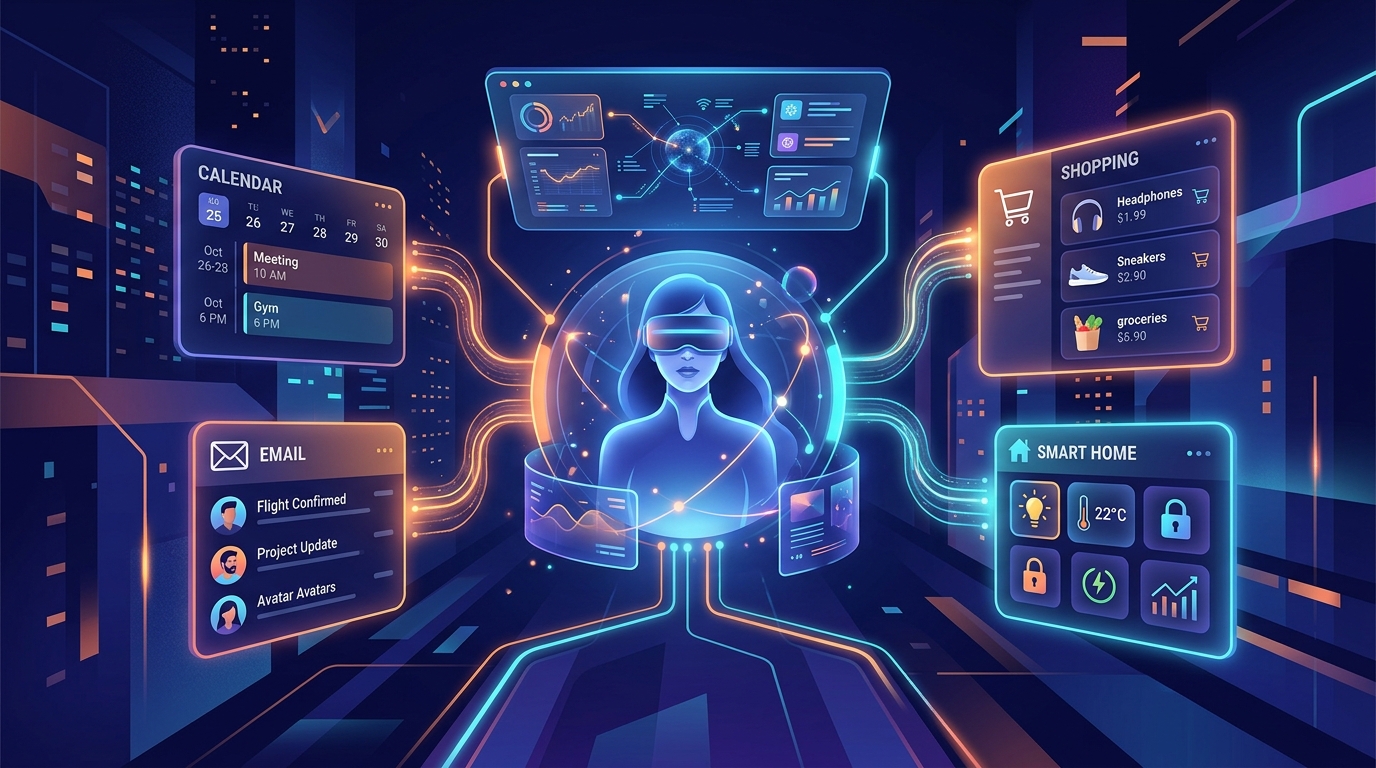
Meta is entering this space with Muse, a personal AI agent designed to connect with services such as email, calendars, shopping, payments, and smart-home devices. Instead of only telling users what to do, Muse is designed to complete multi-step tasks for them.
Meta describes Muse as a new kind of personal AI assistant, although the broader concept of AI agents existed before Muse.
What Is Meta Muse?
Meta Muse is a personal AI agent that can understand a user's goal, plan the required steps, and interact with connected apps and websites to complete tasks.
This makes Muse different from a traditional chatbot.
For example, if you ask a chatbot:
"How can I book movie tickets?"It might explain the process.
With an AI agent such as Muse, the goal is different:
"Find a good movie tonight and book two tickets."The agent can potentially search for movies, check showtimes, select an option, complete the booking process, and ask for confirmation when a sensitive action is required.
When Was Meta Muse Released?
Meta announced and launched Muse on September 8, 2026, initially targeting users in the United States.
The launch is part of Meta's broader push toward personal AI assistants that can do more than generate text or images.
Muse is designed to work through Meta's ecosystem and supported services, with availability and features depending on the user's region and connected accounts.
What Can Muse Do?
Muse is designed to work with several areas of everyday digital life:
- 1. Manage Emails: Instead of manually checking hundreds of emails, ask: "Check my inbox and tell me which emails need a response." Muse can potentially go further by helping draft or send replies, depending on the permissions you provide.
- 2. Manage Your Calendar: Muse can use calendar information to organize your schedule. For example: "Find a free time next week for a one-hour meeting." The agent examines your calendar and identifies suitable times.
- 3. Shopping: AI agents make online shopping more automated. For example: "Find a laptop bag under $50 and order the best option." Muse can search products, compare options, and proceed through checkout when authorized.
- 4. Bookings: Muse can help with tasks such as finding and booking movie tickets. Instead of detailed instructions, users provide a goal: "Book two tickets for a movie tonight around 7 PM." The agent then works through the required steps.
- 5. Smart Home: Muse is designed to interact with connected smart-home services. For example, a user might ask it to: "Turn off the lights." This demonstrates the broader vision of allowing AI to interact with the digital and physical services users already rely on.
How Does Meta Muse Work? (Action and Tool Use)
The most important difference between Muse and a normal chatbot is action and tool use.
A simplified version of the workflow looks like this:
↓
Muse understands the request
↓
Creates a plan
↓
Selects the required tools/services
↓
Interacts with websites or apps
↓
Completes the task
↓
Reports the result to the user
For example:
↓
Find movies
↓
Check showtimes
↓
Choose suitable showtime
↓
Select seats
↓
Proceed to checkout
↓
Request approval if required
↓
Complete booking
The important point is that the user doesn't have to manually describe every individual step.
Muse Has Its Own Virtual Computer
One of the most interesting parts of Meta's approach is that Muse can operate through a virtual computer environment.
Think of it as giving the AI its own computer in the cloud.
Instead of allowing an AI to freely control your personal laptop, the agent can operate within a controlled environment where it can interact with websites and services.
↓
MUSE
↓
Virtual Computer
↓
┌─────────┼─────────┐
↓ ↓ ↓
Websites Apps Services
↓ ↓ ↓
Actions
↓
Result
This architecture is particularly useful for tasks where an API isn't available and the agent needs to interact with a website similarly to how a human would.
How Is Muse Different From a Normal AI Chatbot?
A traditional AI chatbot primarily works with language:
An AI agent adds additional capabilities:
For example:
• Chatbot: "Here are some restaurants you can try."
• AI Agent: "I found a restaurant, checked availability, and prepared the reservation."
This is why agentic AI is becoming one of the major trends in artificial intelligence.
What About Privacy?
The power of Muse also creates one of its biggest challenges: privacy.
Imagine an AI having permission to access:
- Calendar
- Shopping history
- Payments
- Health-related information
- Smart-home devices
Critical Privacy & Security Questions
That information could reveal a significant amount about someone's personal life. This raises important questions:
• What information should an AI be allowed to access?
• Which actions should require user approval?
• What happens if an AI makes a mistake?
• How can users prevent malicious instructions from controlling the agent?
These concerns are particularly important because an AI agent isn't simply generating text — it may be capable of taking real-world actions.
What Is Sentinel?
Meta has also introduced additional safety mechanisms around Muse, including a system called Sentinel.
The basic idea is to have another layer of protection monitor the agent's behavior:
↓
Wants to act
↓
Sentinel
↓
┌───────┴───────┐
↓ ↓
Safe Risky
↓ ↓
Continue Block / Ask
User
This type of architecture is important for AI agents because an agent that can send emails, purchase products, or interact with accounts needs stronger safety controls than an AI that only produces text.
Why Is Meta Muse Important?
Muse is important because it represents a shift in how people may interact with AI.
For years, the typical AI experience has been:
The emerging AI-agent model is:
Imagine telling your personal AI:
"My schedule is packed tomorrow. Find some free time, organize my meetings, respond to routine emails, and order groceries for dinner."Instead of spending an hour manually completing these tasks, the goal is for the AI to handle much of the digital work.
That could fundamentally change how people use computers.
The Future of Personal AI Agents
Muse is part of a much larger industry movement toward agentic AI.
Future personal agents could potentially become capable of managing increasingly complex workflows:
↓
Personal AI Agent
↓
Automated Actions
The biggest challenge won't simply be making AI smarter. It will be making AI trustworthy, secure, predictable, and controllable.
Users need to know:
- What the AI can access
- What the AI can change
- When the AI needs approval
- How to stop an action
- What happens when something goes wrong
Final Thoughts
Meta Muse shows where personal AI could be heading next.
The future may not be about having an AI that simply answers every question. Instead, AI could become a digital assistant that actually performs everyday tasks.
Muse's ability to work with connected services and a virtual computer makes the concept especially interesting. At the same time, the more powerful these agents become, the more important privacy and security will be.
The biggest question is no longer:
"Can AI do this?"It is becoming:
"Can we trust AI to do this for us?"And that question could define the next generation of personal AI.