AI & Technology
Meta Connect 2026: Meta Unveils Muse Charm, Lightweight VR Glasses and AI-Powered Smart Glasses
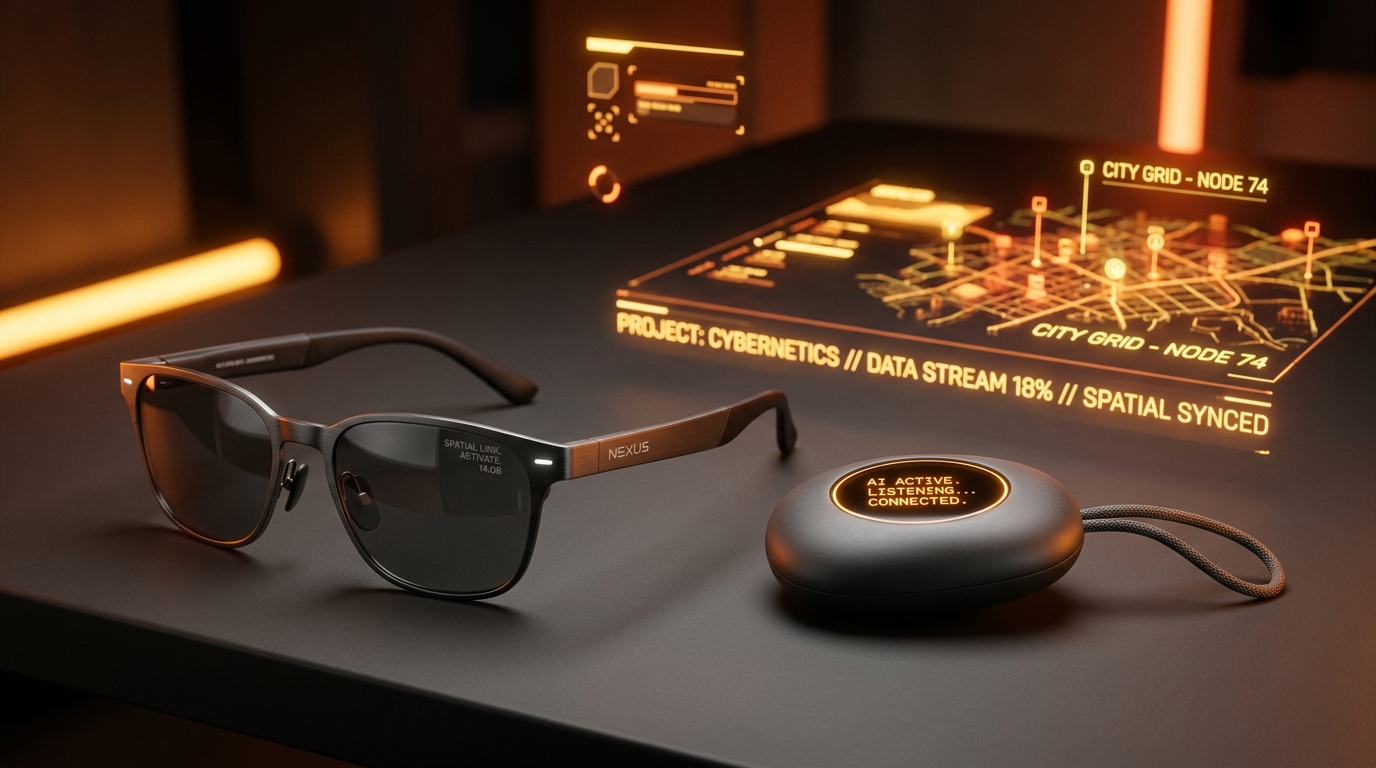
Overview: Ambient AI and Spatial Computing
Meta has unveiled a new lineup of AI and spatial-computing products at Meta Connect 2026, showing how the company is moving beyond traditional VR headsets and chatbots toward AI assistants that can be accessed throughout the day.
Among the biggest announcements were Muse Charm, a pocket-sized AI device powered by Meta's Muse personal agent, a new pair of lightweight Meta VR Glasses, and new AI capabilities coming to Meta's smart glasses.
What is Meta Muse?
Muse is Meta's personal AI agent designed to do more than simply answer questions.
Unlike a traditional chatbot, an AI agent can be given a goal and perform multiple steps to accomplish it. Muse can use a browser and a virtual computing environment to work on tasks, potentially allowing it to research information, compare options, and complete supported tasks on a user's behalf.
Meta introduced Muse in September 2026, with the service initially rolling out in the United States across iOS, Android, and the web.
The company is also bringing Muse to its AI glasses, making it possible to interact with the assistant while going about your daily activities.
Muse Charm: A Pocket-Sized AI Assistant
One of the more unusual products announced at Connect 2026 is Muse Charm.
Muse Charm is a small, pocket-sized device designed to provide quick access to Meta's Muse AI assistant. Its design is closer to a small personal gadget than a traditional smartphone or computer.
The idea is simple: instead of opening an app whenever you want to use an AI assistant, you can carry a dedicated device that is always available.
You could ask Muse questions, interact with the assistant, and use it for supported AI-powered tasks.
How Does Muse Charm Work?
The basic process looks like this:
For example, you could ask Muse to research a product, help organize information, or answer a question.
Meta is targeting a holiday 2026 release for Muse Charm, although a specific launch date and final pricing have not been announced.
Meta's New VR Glasses: 100-Gram Spatial Display
Meta also introduced a new generation of lightweight VR glasses designed to make virtual and spatial computing more practical.
The glasses are significantly lighter than the company's Quest 3 headset. Meta says they weigh around 100 grams, or roughly one-fifth the weight of Quest 3.
Instead of putting all of the computing hardware directly inside the glasses, Meta uses a separate compute puck connected to the glasses.
The glasses handle the visual and interaction experience, while the external computing device handles processing, battery, and storage.
This approach helps keep the glasses considerably lighter.
A Virtual Workspace Anywhere
One of the major applications for the new glasses is productivity.
Instead of being limited to a single physical monitor, users can create virtual screens around themselves.
This could make the glasses useful for developers, designers, students, and people who frequently work with multiple displays.
- Browser Workspace: Keep a primary browser window directly in front of you for research and navigation.
- Developer Environment: Place a dedicated coding environment or terminal on one side.
- Communication Hub: Pin messaging and team collaboration applications on the other side.
- Infinite Displays: Spawn additional virtual screens around your physical workspace as needed.
Turn a Table Into a Keyboard
Another interesting feature is the ability to interact with a virtual keyboard using a flat surface.
The glasses use cameras and sensors to track the user's hands and understand their interaction with the surface.
In practice, this could allow a table or another flat surface to become an interactive input area.
The concept is:
This removes the need to carry a traditional keyboard for certain interactions.
Movies and Immersive Entertainment
The new Meta VR Glasses are also designed for entertainment.
Meta says the glasses support features such as a 5K Infinite Display, Dolby Vision, and Dolby Atmos, along with 3D and immersive content.
The goal is to create a large virtual viewing experience without requiring a physical television or monitor.
A user could put on the glasses and see a large virtual screen positioned in front of them.
Muse Comes to Meta AI Glasses
Perhaps the most important part of the announcement is the integration of Muse with Meta's AI glasses.
Meta wants its smart glasses to become more than cameras and speakers. With Muse, they can become an AI assistant that understands what the wearer is seeing and responds to spoken requests.
For example, a user could look at a product and ask:
“Muse, what is this?”
Or they could look at a document and ask the assistant to explain what it says.
This creates a more natural interaction between the physical world and AI.
Instead of:
the experience can become:
When Will These Products Be Available?
The products have different timelines.
| Product | Timeline | Pricing & Availability |
|---|---|---|
| Meta Muse | September 2026 | Rolling out in US (iOS, Android, Web) |
| Muse Charm | Holiday 2026 | Dedicated pocket AI device; pricing TBA |
| Meta VR Glasses | Spring 2027 | Starting at $1,299.99 |
| Meta AI Glasses + Muse | Rolling out 2026-2027 | Multimodal vision and voice integration |
Availability can vary by market, so users outside the United States may have to wait for additional regional launches.
Why This Announcement Matters
Meta's Connect 2026 announcements show a broader shift in how the company is approaching AI.
Instead of keeping AI inside a smartphone or website, Meta is putting its AI assistant into different types of hardware:
The common idea is to make AI available through more natural interfaces such as voice, vision, gestures, and wearable devices.
The Bigger Picture: Moving Beyond Screens and Keyboards
The next generation of AI may not simply be about having a smarter chatbot.
The bigger change could be where and how we interact with AI.
Meta's latest products combine AI agents, cameras, microphones, spatial computing, eye tracking, and hand tracking to create experiences that are less dependent on traditional screens and keyboards.
Muse provides the intelligence, while devices such as Charm and Meta's glasses provide new ways to interact with it.
Meta Connect 2026 therefore represents more than a collection of new gadgets. It shows Meta's vision of a future where AI assistants are available around us — whether we're working, watching entertainment, shopping, or simply interacting with the physical world.
Key Takeaway:
“The future of AI is ambient and multimodal—moving beyond phone screens into wearables, spatial computing workspaces, and contextual vision.”