AI & Technology
Jev: A New AI Model Designed to Make Decisions, Not Generate Text
Overview: The Shift from Conversation to Decision Making
The AI industry has largely been built around models that generate text. ChatGPT, Claude, Gemini, and other large language models can write emails, answer questions, summarize documents, generate code, and have natural conversations.
But what if an AI model didn't need to generate text at all?
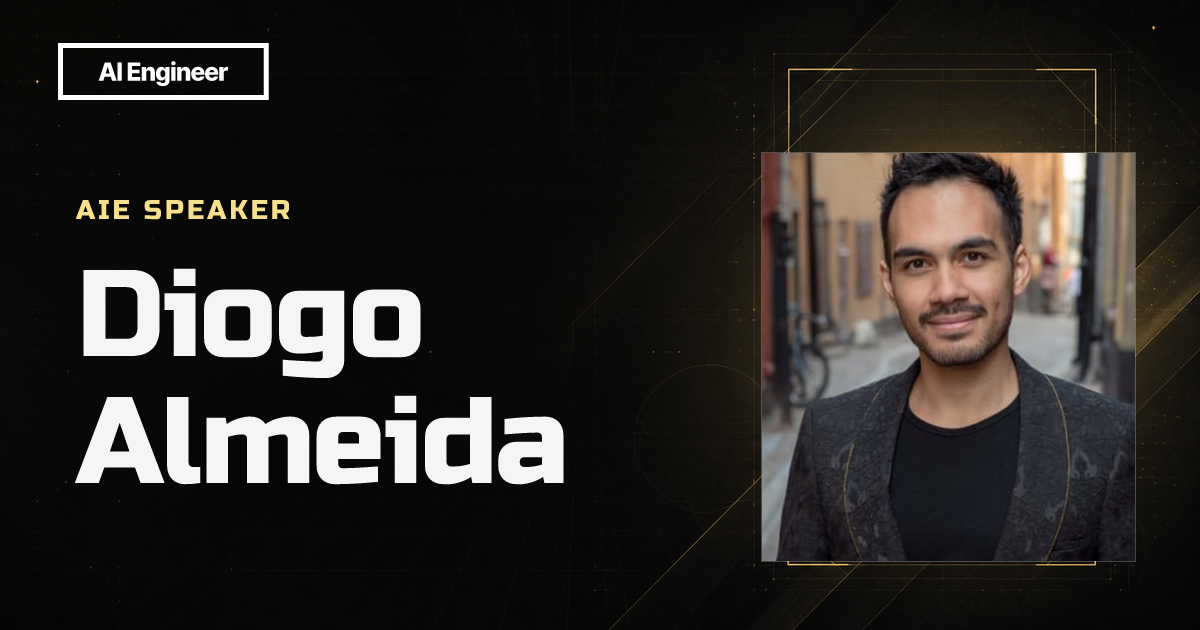
That's the idea behind Jev, a new AI model from TypeSafe AI, a startup founded by Diogo Almeida, one of the early researchers involved in the development of ChatGPT.
TypeSafe AI introduced Jev and a new category called System One Models in September 2026. Instead of focusing on conversation and text generation, Jev is designed to make fast, structured decisions that software applications can directly use.
What Is Jev?
Jev is a foundation model designed primarily for machine-to-machine decision making.
Traditional AI models generally work like this:
Jev takes a fundamentally different approach:
For example, imagine a customer sends:
“I was charged twice for my subscription. Can I get a refund?”
A traditional LLM might respond with a complete customer-service message.
Jev could instead return structured information such as:
The application can then use those values to automatically perform the next action.
This makes Jev less like a chatbot and more like an AI decision engine inside an application.
What Are System One Models?
TypeSafe AI calls its approach System One Models.
The idea is to build AI models specifically for software systems rather than primarily for human conversations.
A conventional language model is optimized to generate a sequential stream of tokens:
A System One model focuses on producing structured decisions that applications can consume directly:
This approach can be particularly useful when AI is being used thousands or millions of times inside a software product.
When Was Jev Released?
TypeSafe AI announced Jev and System One Models on September 14, 2026.
The model was introduced as an early-access product, with TypeSafe AI positioning it as a new approach to AI inference rather than another general-purpose chatbot.
The company says it developed the technology over approximately two years while operating in stealth.
How Does Jev Work?
One of the major differences between Jev and traditional LLMs is how it approaches AI decisions across three core architectural pillars:
- 1. Structured outputs: Jev is designed to return structured, typed results instead of arbitrary natural-language responses. A developer doesn't have to take a paragraph of AI-generated text and regex-parse what action the model intended. Instead, the application receives data that directly maps to its business logic.
- 2. Calibrated Decisions (RLCD): TypeSafe AI's training approach is called RLCD, or Reinforcement Learning for Calibrated Decisions. The goal is not simply to produce an answer that looks good, but to make decisions while providing meaningful, statistically reliable confidence estimates.
- 3. Parallel Sampling: Traditional language models generate text sequentially, token by token. Jev is designed around structured decisions and parallel processing, dramatically reducing sequential overhead and driving latency down to roughly 70–500ms.
Architectural Deep Dive: Structured Outputs & Calibrated Confidence
Instead of raw prose, Jev enforces type safety directly at generation time:
A calibrated confidence score is particularly useful because backend applications can establish deterministic thresholds:
This creates a clean, robust combination of high-speed AI automation and human oversight.
Does Jev Really Have “No Hallucinations”?
This is one of the most interesting claims surrounding Jev.
TypeSafe AI describes Jev as having zero hallucinations, but this needs to be understood carefully.
The claim primarily relates to the model's structured and type-safe output.
For example, suppose an application defines:
A type-safe system will not return an invalid or malformed string like
status = maybe because maybe isn't an accepted schema value.However, type safety does not automatically mean that every AI decision is factually correct—Jev could still make an incorrect classification or prediction.
Why Is Jev Faster and Cheaper?
Traditional LLMs often generate hundreds or thousands of tokens for a single response. Jev is engineered to produce compact, structured decisions.
Instead of generating:
“The customer appears to be eligible for a refund because...”
the application receives a micro-payload:
There is vastly less output to generate, transmit, and parse. TypeSafe AI claims Jev can deliver 20–200× faster results and 40–400× lower costs in benchmark comparisons. (These numbers should be treated as company-reported benchmark claims, not universal numbers for every AI task.)
Why Would Developers Use Jev? Real-World Workflows
Jev becomes compelling when AI is embedded directly inside an application's backend architecture rather than acting as a conversational UI:
- Customer Support Triage: Customer message → Jev → (Intent: Password Reset, Urgency: Medium, Confidence: 98%) → Automated workflow triggers without human latency.
- Fraud Detection: Transaction, customer history, device info → Jev → (Fraud risk: High, Confidence: 97%) → Automatic routing to security verification.
- Lead Classification & CRM: When a user enters: “I'm looking for a 3BHK in Pune under ₹1 crore and want to visit this weekend,” Jev outputs structured JSON:
{ property_type: '3BHK', budget: 'under_1cr', location: 'Pune', intent: 'high', visit_requested: true, confidence: 0.96 }for instant agent assignment. - AI Verification & Guardrails: Jev can act as a lightweight judge or verifier alongside traditional LLMs: User → LLM → Generated answer → Jev → Verify/Score/Classify → Accept or Route to Human Review.
Jev vs. Traditional LLMs
Comparing the core distinctions between conventional conversational LLMs and System One models:
| Feature | Traditional LLM | Jev (System One) |
|---|---|---|
| Primary purpose | Language generation | Decision making |
| Conversational text | Yes | Not primary purpose |
| Structured output | Supported via prompts/schemas | Core architectural design |
| Confidence-based decisions | Approximate / Logprobs | Calibrated focus (RLCD) |
| Software automation | Yes | Core focus |
| Long-form writing | Yes | No |
| Type-safe decisions | Can be configured | Core design guarantee |
| High-volume classification | Possible (high token cost) | Engineered for scale |
| Backend workflows | Useful | Strongest use case |
Is Jev a Replacement for ChatGPT?
No. Jev and ChatGPT solve different problems.
A model such as ChatGPT is built for when a human wants to interact and converse with AI:
Jev is designed for situations where software requires an instant, deterministic AI decision:
Future enterprise software architectures will likely leverage both in tandem:
The two approaches complement each other rather than compete directly.
The Bigger Idea: Does Every AI System Need to Generate Language?
The profound takeaway behind Jev is not simply that it is another AI model.
It raises a broader fundamental question: Does every AI system need to generate human language?
For countless software applications, the answer is an emphatic no:
• A fraud system doesn't need a paragraph explaining why a transaction looks suspicious.
• A CRM doesn't need a 500-word response to classify an incoming sales lead.
• A payment gateway doesn't need an essay to decide whether a checkout flow requires KYC verification.
These systems require something far more direct:
That is the architectural paradigm TypeSafe AI is addressing with System One Models.
Conclusion: Traditional LLMs Talk, System One Decides
Jev introduces a fresh lens on machine intelligence. Instead of optimizing AI primarily for open-ended conversation and human-facing prose, TypeSafe AI is building models around fast, structured, probabilistic decisions for software systems.
Its RLCD training approach, type-safe outputs, calibrated confidence metrics, and focus on extreme latency reduction make it particularly relevant for engineering teams powering enterprise automation, fraud detection, customer support routing, CRM pipelines, and real-time decision loops.
The Core Distinction:
“Traditional LLMs are designed to talk. System One Models are designed to decide.”